What’s Inside the E-Book?
Poland’s Real-Time VAT & KSeF in a Nutshell
A clear overview of Poland’s move to a centralized, clearance-style CTC model via KSeF, where FA(3) XML invoices are validated, assigned a KSeF ID and UPO, and only then made available to buyers.
Key Dates & Go-Live Timeline
A practical timeline of open testing, certificate applications, mandatory issuance and receipt dates, the general grace period until 31 December 2026, and the deferred date for micro-entrepreneurs from 1 January 2027.
Scope: Who Must Use KSeF?
Clarity on which entities fall under the mandate: taxpayers established in Poland, foreign entities with a Polish fixed establishment, and how obligations differ when there is no Polish FE or it does not participate in the supply.
KSeF Operations & FA(3) XML
Step-by-step explanation of how FA(3) XML invoices are submitted via API or taxpayer application, validated by KSeF, and delivered to buyers inside KSeF or, where permitted, outside KSeF using a visualisation.
Delivery Rules, QR Codes & Outside-KSeF Flows
Guidance on when invoices can be delivered outside KSeF, mandatory QR code requirements on visualisations, and how to keep a single source of truth across XML and PDF/print outputs.
Exception Handling & Outage Scenarios (Offline24 / Emergency)
A breakdown of how to operate under Offline24 (issuer-side outage) and Emergency (authority-announced outage), including upload deadlines, labelling, and resubmission playbooks.
Key Compliance Considerations & Penalties
Summary of key obligations, potential penalties for non-compliance, and how Poland’s e-invoicing regime impacts AP/AR operations, VAT control, and risk management.
Strategic Readiness & Automation
Practical recommendations on data quality, pre-submission validations, exception handling, and designing automated, real-time KSeF processes that support finance, tax, and IT teams end-to-end.
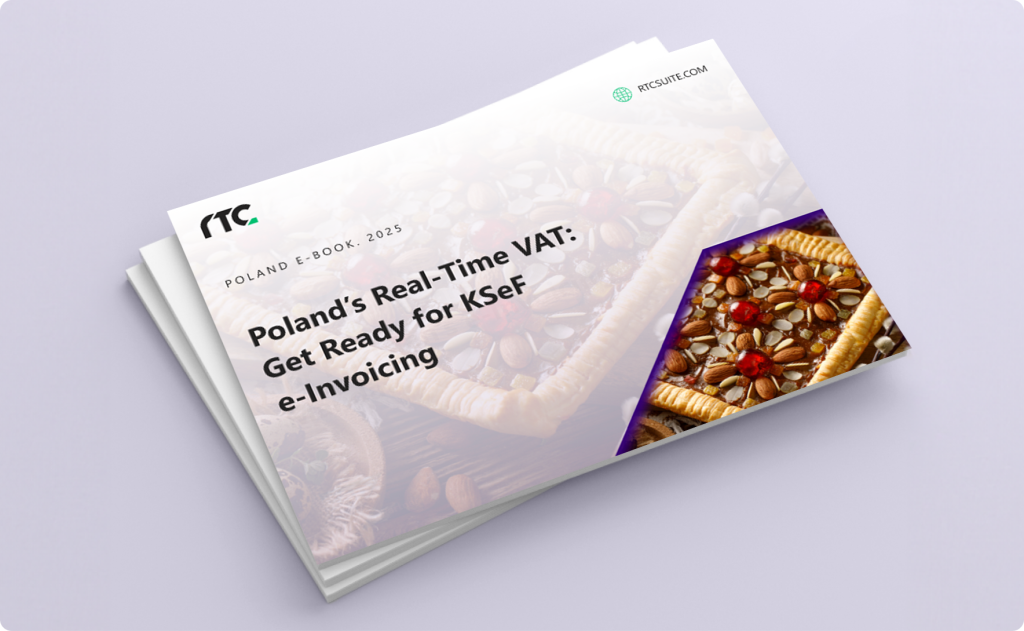
Why Download This E-Book?
Poland is moving decisively toward real-time VAT control through KSeF. For Polish entities, foreign companies with a Polish FE, and shared service centres serving Polish operations, this change is both a compliance obligation and an opportunity to modernise invoice flows.
Comprehensive Regulatory Overview
Get a single, concise guide explaining how KSeF works, who is in scope, which transactions must be cleared, and how clearance interacts with existing invoicing and archiving requirements.
Clear Timeline & Planning Milestones
Use the key dates and grace period to structure your internal roadmap—from testing and certificate setup to mandatory issuance, receipt readiness, and micro-entrepreneur specifics.
Technical and Operational Clarity
Understand FA(3) XML, KSeF ID/UPO handling, QR requirements, Offline24/Emergency scenarios, and how to design robust submission, retrieval, and monitoring flows across AR, AP, and accounting.
Practical, Business-Focused Guidance
Benefit from recommendations focused on data quality, exception workflows, and process automation—so KSeF becomes a driver of efficiency, not only a regulatory burden.
Expert Perspective on Real-Time VAT
Leverage RTC’s experience in digital tax compliance to align tax, IT, and operations, and to prepare your teams for real-time controls, stronger VAT governance, and smoother supplier–buyer collaboration.
🔹 Download your free copy today and make sure your organisation is ready for Poland’s real-time VAT era with KSeF.
Contact Us Today
📩 For more information and assistance, Contact Us at growth.team@rtcsuite.com or Book a Demo to explore RTC’s e-Invoicing solutions.